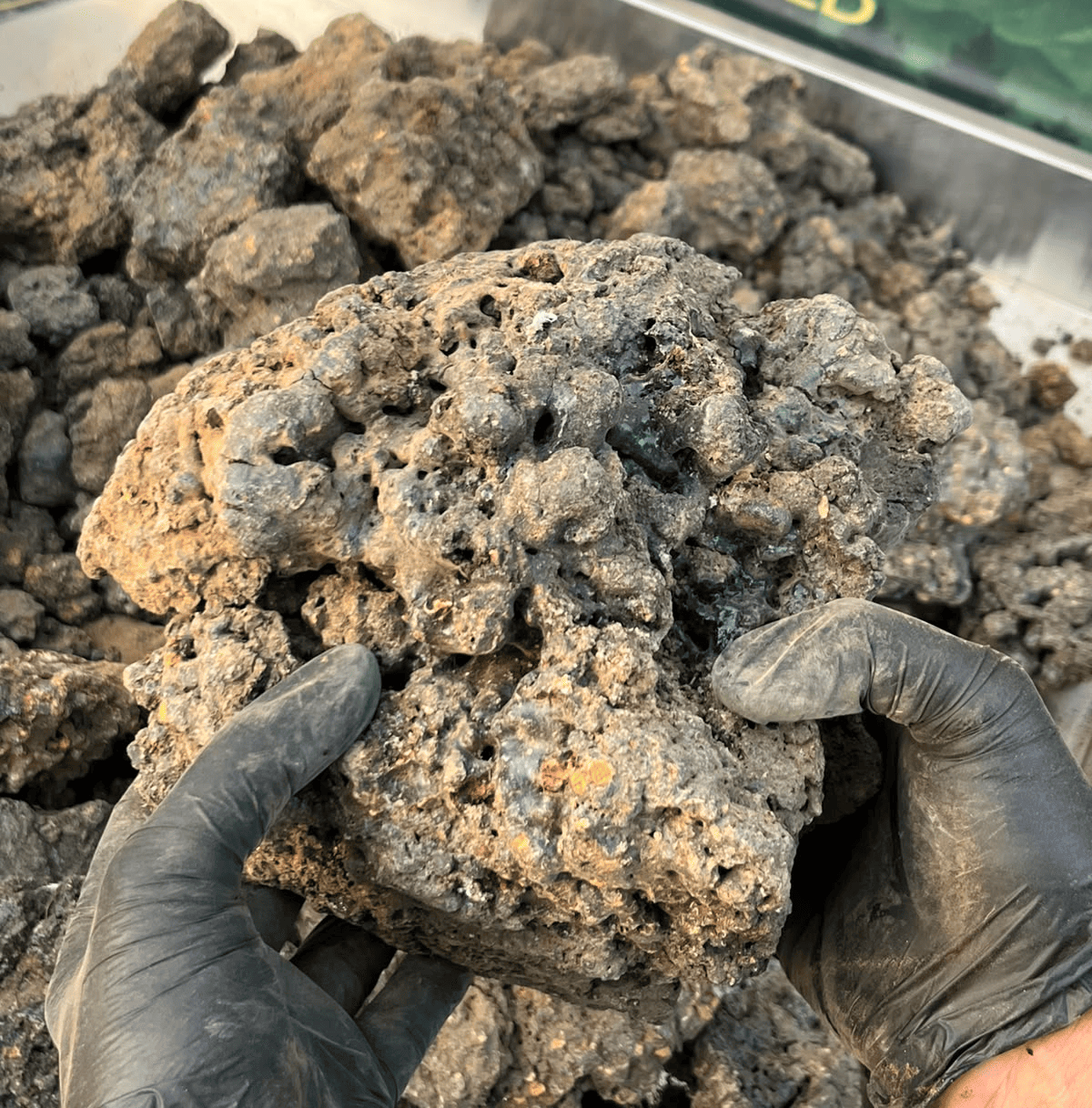
Gold Grade is the highest quality tier of Himalayan shilajit rock, extracted from 16,000 to 18,000 feet where animals and environmental contaminants can’t reach. It’s dense, heavy for its size, and has a clean mineral smell. This page explains the grading system itself; for how sourcing region affects shilajit, see our Himalayan sourcing guide.
How Gold Grade Is Identified
- Weight and density: Gold Grade rock is noticeably heavier in the hand than lower grades, densely packed with resin
- The water test: Gold Grade rock visibly darkens when water is poured over it, a field identification marker used at the point of sorting
- Smell: a clean mineral smell, without the off odor associated with contaminated rock
What Gold Grade Is Not: Danedar
Danedar (sometimes called B-grade) is granular rock contaminated with droppings from Royle’s pika and flying squirrels, along with herbs and shrubs pressed into the surface. It’s common and cheap, and it smells and tastes of what’s in it. Every piece of Danedar rock should be rejected at sorting, not processed.
Why Grade Matters More Than Origin Alone
Two suppliers can both truthfully say their shilajit is “from the Himalayas” while selling very different quality. One may carefully sort for Gold Grade rock only; another may process Danedar-contaminated rock without sorting at all. Asking “what grade is this?” tells you more than asking “where is this from?” alone.
Our Standard
East-West Shilajit Company sources and processes Gold Grade rock exclusively. Every remaining piece after initial sorting is broken by hand and rechecked, since contamination can hide inside rock that looks clean on the outside.
Frequently Asked Questions
What is the best shilajit grade?
Gold Grade is the highest quality tier, dense, contaminant-free rock extracted from extreme altitude (16,000 to 18,000 feet), identified by its weight, smell, and the way it darkens when water is poured over it.
How are shilajit grades explained or classified?
Grading depends on altitude of extraction, rock density, and contamination level. Gold Grade is the premium tier; Danedar (B-grade) is a lower, animal-contaminated grade that should be rejected during sorting.
What is Danedar shilajit rock?
Danedar is granular rock contaminated with droppings from small mountain animals, along with herbs and shrubs. It is a lower, undesirable grade that a quality manufacturer sorts out and discards.
How can you tell if shilajit rock is Gold Grade?
Gold Grade rock is noticeably heavy and dense, has a clean mineral smell, and visibly darkens when water is poured over it, a field test used during sorting.
Does a higher grade always mean higher fulvic acid?
Grade and fulvic acid content are related but not identical measurements, grade refers to rock quality and contamination level, while fulvic acid is a lab-tested chemical result. Gold Grade rock, properly processed, is associated with higher, more consistent fulvic acid results.
Source Gold Grade Directly
We source and process Gold Grade Himalayan rock exclusively, with every batch lab verified.